I wanted to compile a list of some of the biggest improvements of SAP Integration Suite in 2024. And there have been made quite a lot of them over the period.
I have probably forgotten some of the improvements that you like, then please let us know on LinkedIn.
Edge Integration Cell
Running your integration on your on-prem network has always been a request. SAP delivered the Edge Integration Cell and it became possible to run the integration on your own hardware or on a Kubernetes cluster in your hyperscaler.
It was a bit more complicated than just installing the Windows application and required experience with running a Kubernetes cluster. We spent some time learning how to deploy and run it to explore how it worked with Figaf tool.
There are many benefits of Edge, so for larger organizations it is worth exploring what it looks like running it. It does require some extra work to manage.
Message status
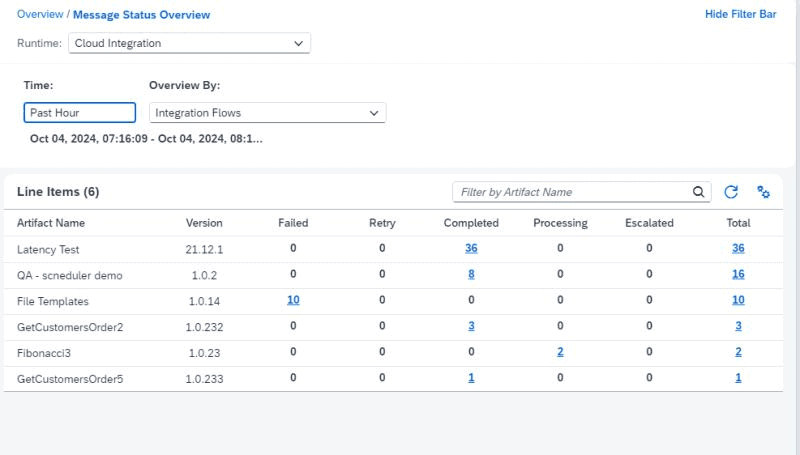
As an old SAP PI Integration Consultant, it has been a bit of a challenge to understand what messages were processed in Integration Suite. With the new overview it is much easier to understand what is going on.
I think this overview makes it much easier to see what is happening in your landscape.
See more.
Event Mesh in Integration Suite
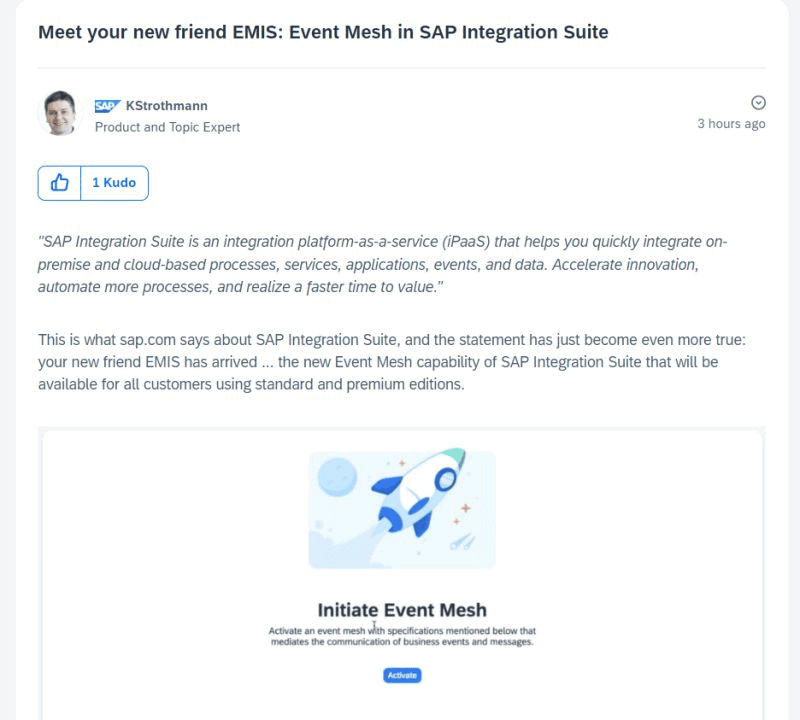
Most organizations are currently evaluating events and how they could be used. Adding Event Mesh inside the Integration Suite will make it a lot easier for customers to get started with. No need to establish a new contract.
Once you then have a good use case of the event, you can upgrade to the Advanced Event Mesh, which will give you much more advanced features, better for enterprise usage.
See more
Migration tool
We don’t live in a vacuum. Figaf has our own migration tool that has some advantages over SAP’s, as we see it. One of the original challenges with SAP tools was that they used fixed templates. So for each different combination like mapping, JMS, XSLT or CSV they needed a new template. The number of templates would quickly grow with each permutation. We had also considered this briefly but went with CGI (Computer Generated Iflows).
SAP now also uses CGI, and it also supports multiple Interface and receivers. This means they only need to add logic for JMS once and then it propagates to the other flows.
See more.
But check and compare your migration to see which creates the best result and what will be easier to maintain.
Design guidelines
This is a great tool to help get more information about the iflows you have built and if they could be created better. SAP has been pretty good at adding new rules which make the tool much better.
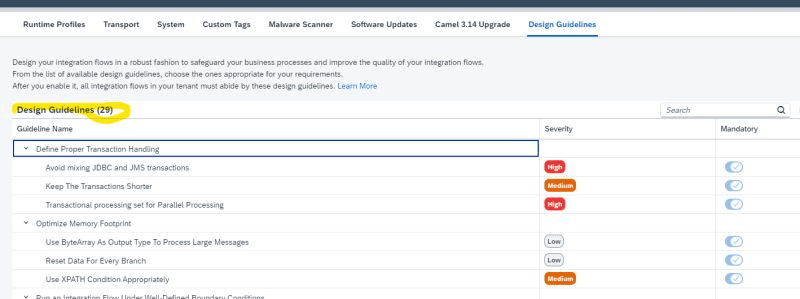
In Figaf you can see the Iflows you are transporting and all the rules they are breaking. This makes it much easier to validate if they are okay and serve as an extra validation.
See more.
Fun fact: it is the only update on the Cloud Integration API in 2024.
Imported archives
As a part of the PI to Integration Suite migration, SAP added support for Imported Archives. This enables you to use them from the Function Libraries. It would be nice to be able to use the Jars in the archives in Groovy scripts to simplify usage of external jars.
Figaf does, of course, support transport of this and the ability to see dependencies.
Iflow generation with AI
This was the part that was shown at Sapphire about how SAP Integration Suite was able to generate iflows. The demos looked nice, but I think it was limited to generating something like two different iflows but with different connections.
It did use an SLD-like feature, which could be quite useful to manage your iflows. That way, you don’t need to create a lot of different connections, but I am not sure where this part is heading.
See more
It will be interesting to see if SAP will take this to the next step and add some more features to help build iflows with AI.
Anomaly detection for API management
I think this is a great use case of what AI is able to detect and that you had not planned. You should still have the different security policies in place to ensure that there are no problems.
See more.
Pipeline concept
This may sound strange for someone that came from a CPI background. A way to replicate SAP XI/PI messages processing. It was by far not the prettiest or easiest process to operate.
Since the March release, many versions have improved the functionality. They were even able to get a new UI for the Partner Directory built, which shows how much SAP is focusing on this.
See more
If you are migrating, it is one concept that you need to explore. You can use the Figaf Migration Tool to explore a migration to the Pipeline Concept.
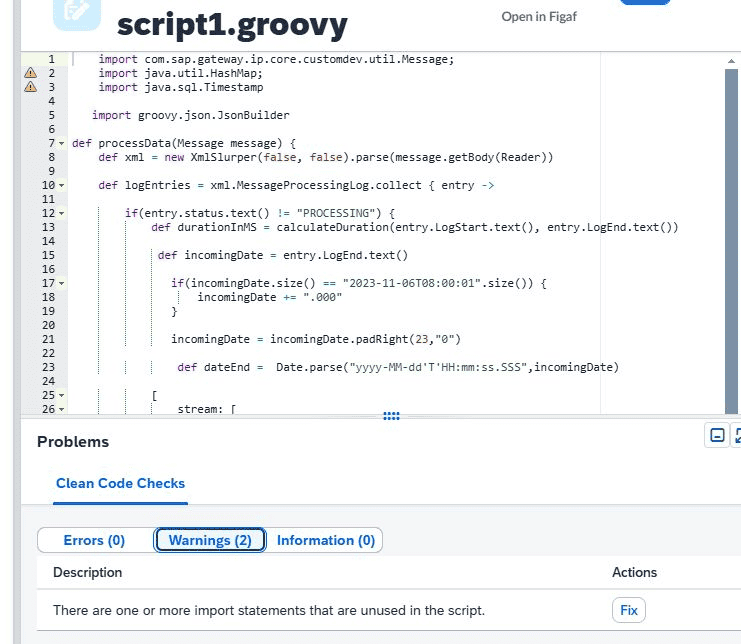
Script validation
You can now easily check your Groovy scripts and XSLT for static errors that can be improved. I think this makes it a little easier to see if something you have forgotten to remove after a script. And I believe it could also be a good source for performing static checks.
See more.